The Philosophy
Field notes from a working life spent paying attention to how ideas become value - the practice beneath the writing, teaching and work.
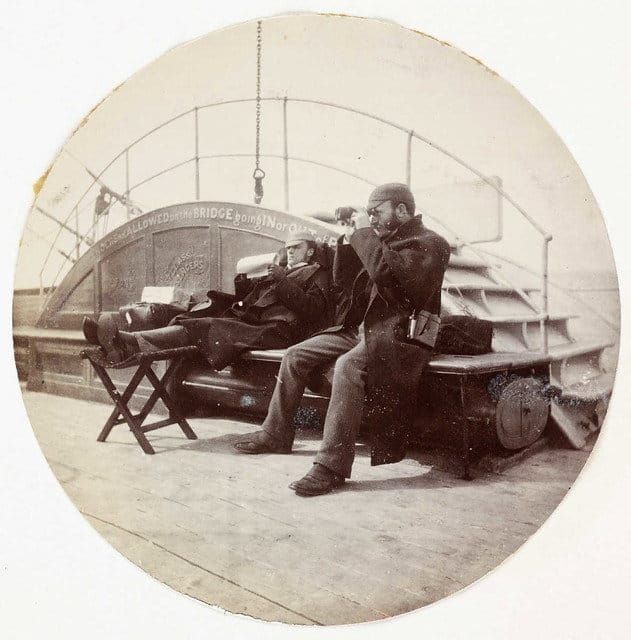
It all starts with noticing
When I was about eight years old, I wrote a story I thought might be funny. I sketched an outline, put pen to paper, took it into school and read it out. People laughed. I remember the surprise more than the laughter, and the satisfaction that it worked. Something that had only existed in my head a week earlier was now doing work in the world.
I have been mildly obsessed with that journey ever since. The journey of how an idea in someone's head can become something valuable to other people.
The things I'm deeply curious about – books, films, music, businesses, old buildings, workshops, photographs, human success – begins the same way, as an idea.
Someone notices something. A thought forms. It travels through a remarkably consistent set of stages until, if the conditions are right on that journey, it becomes valuable to someone else.
An outline becomes a book. A sketch becomes a building. A conversation becomes a company. A workshop becomes a movement.
Underneath each of them: an idea in a mind, and before that, someone paying attention long enough to have one.
The study of how ideas become something valuable
For most of my working life, I've studied this happening inside organisations. I sat in meeting rooms as ideas were born, nurtured, ignored, reshaped and — often — brought into the world.
I watched teams struggle to communicate things they understood instinctively. I saw remarkable ideas abandoned for reasons that had almost nothing to do with the quality of the idea itself.
Over time I realised I wasn’t especially interested in organisations themselves. I was interested in what was happening inside them: the journey from a private noticing to a public thing of value. And the conditions that either allowed that to happen with ease, or gently prevented it.
That interest also remained broad.
I found the same journey in museums, where curators shape meaning through objects and space. In cities, where thousands of small decisions accumulate into a distinct character, which makes one city much more pleasing to visit than another.
In publishing (my early career), where a thought becomes words, words become pages, and pages find their way into another person’s thinking. In workshops and talks, where a room full of strangers can leave seeing the world differently, and go on to bring what they learn to their goals of turning an idea into something else.
Even in the ordinary things: a postbox outside Winchester Cathedral, a well-made notebook, a railway timetable, a conversation overheard in a café.
Once you notice the journey, you notice it everywhere.
Disciplines start looking less like separate crafts and more like people doing the same work in different contexts, with different people — trying to bring something into being that did not previously exist, with the belief it means something to someone.
That work fascinates me. It has for a long time, and I suspect it always will.
The idea to value system
Spend enough time studying anything and a system tends to introduce itself, eventually. Mine did, without much invitation, but it did take 15 years.
All ideas follow a remarkable similar journey as they change shape, form and structure to become something real, that can be offered to other people, and in turn generate value.
Idea > Invest > Activity Set > Creative Action > Ship > Value
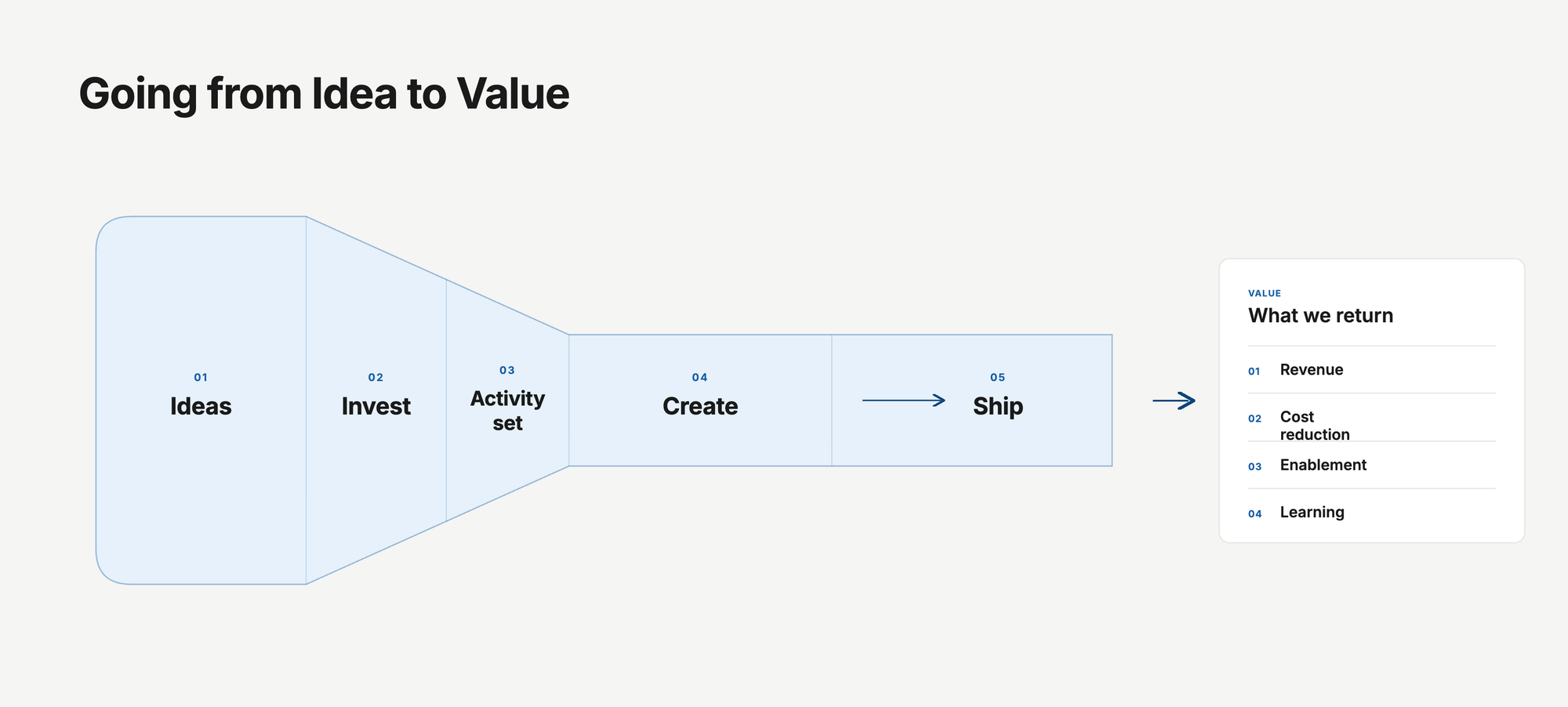
On this site, and in my work, you will occasionally meet words like Map, Physics, Wiring, Engine and Flywheel. They are not products so much as landmarks on a map.
Map asks where we are and where we are going – so that those creating from ideas are moving a business and a life in the right direction.
Physics asks how ideas move – and the journey, whether a solo creator or a large corporate – is remarkably similar.
Wiring asks how meaning survives the journey, and how people gain clarity and a shared understanding.
Engine asks what conditions let people do good work and creative potential be explored.
Flywheel asks how attention and learning compounds over time.
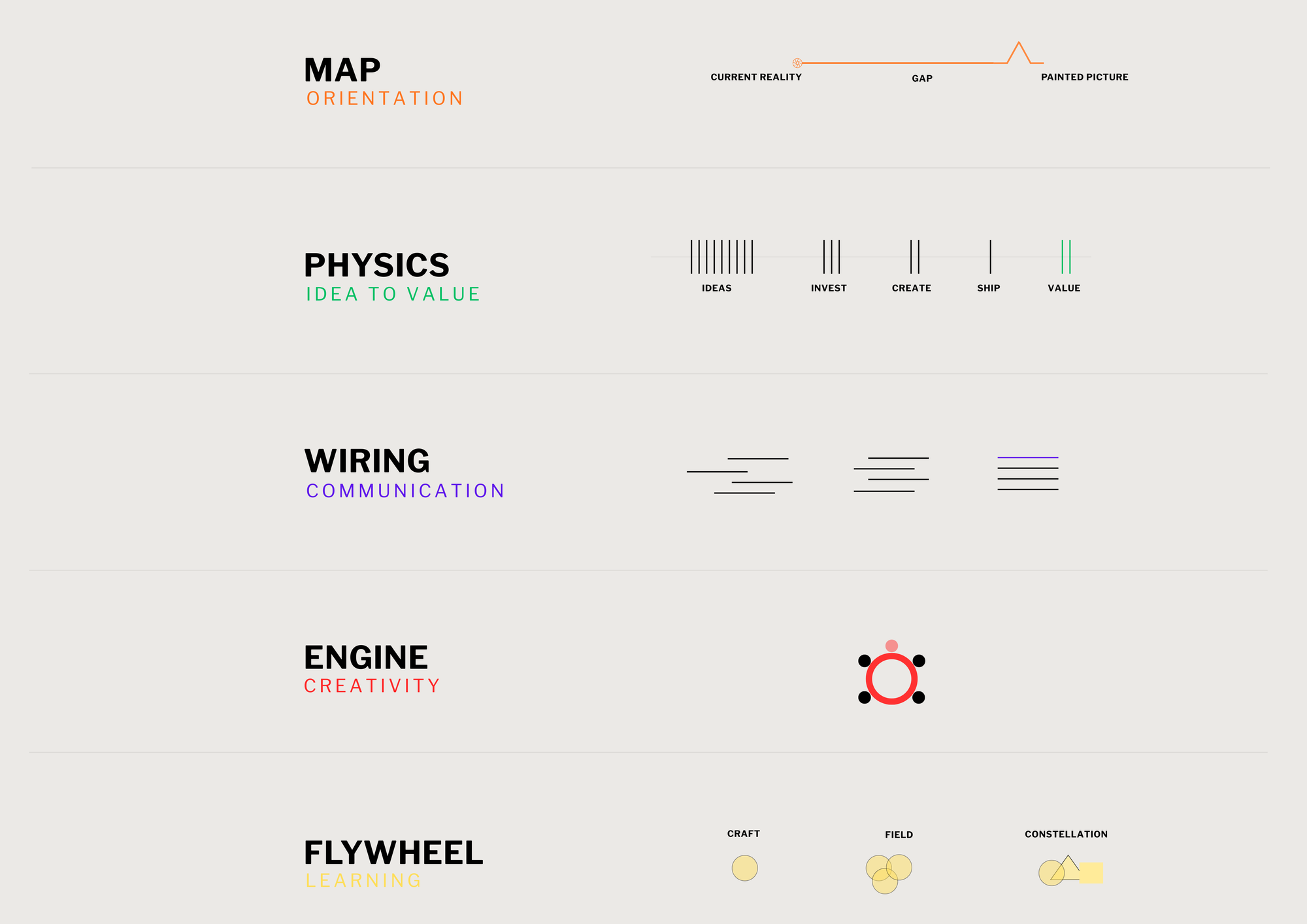
Together they, with around 25 grounding principles, are the system and thinking that sits beneath what I write, teach and make. We call it the Idea to Value System.
But the system is not the work. The work has always been the noticing. The steady practice of paying attention to how ideas become value – and what separates the ones that arrive from the ones that do not.
The Idea to Value system
The same body of work, shaped for different needs — from the thinking behind it, to the calm read, to the guide you work from. Take whichever fits where you are right now.
The Philosophy
The thinking underneath it all
Why any of this matters, and the twenty-year practice it grew out of — a working life spent paying attention to how ideas become value. Start here for the worldview beneath the work.
The Life of an Idea
Pocket-sized digital field guide
The whole system in its calmest form — short chapters you read like essays, turning each idea over slowly. The place to start if you want to see how work becomes value, and think about your own differently.
The Idea to Value Handbook
26 applied principles · free with Studio membership
The working version of the same system — every principle with its red flags, practical steps, and the moves to make when a project is stuck. The handbook you reach for on the job.
From idea to sustainable work
A 50-page guide and 40-minute audio for independents who want to build something durable — not just visible.
The early grind isn't you getting it wrong. It's the cost every idea pays before it pays you back. The skill is staying in the game long enough to come out the other side. For solo creators, independents and people working on their own spend.
Field Notes
Cultivated is where I keep the field notes, the finished products and the work that helps others turn ideas into something of value, usually in the context of work.
Some of them become essays. Some of them become courses, or books. Others become films, workshops, photographs, conversations and newsletters.
Many of them become commercial work. Businesses tend to come to me when there is a gap between the ideas they have and the value those ideas reach – when good thinking is getting lost on the way to becoming something real, or when the place has subtly stopped being somewhere people can, and want, do their best work.
That work is talks, workshops, and longer engagements inside organisations who want to close that distance. It is also about making the place better to be in while the work gets done.
Those things matter. But they are not the point.
The point is the practice: to stay curious, to keep looking, to ask better questions, to follow ideas wherever they lead. And to nudge them into getting there more smoothly, more effectively and more true to the value they have.
I have become steadily more convinced that value is rarely the result of a single moment of brilliance, or a collective push through the grind. Almost always, it is the result of attention and a good climate and good conditions applied consistently over time.
A life is built that way. So is a body of work. So is an institution. So is a culture.
Perhaps that is why I have always felt closest to people who make interesting things – writers, designers, craftspeople, teachers, filmmakers, founders, anyone attempting to leave the world slightly different than they found it, and for the better.
They are all engaged in the same act: taking a private noticing and turning it into something worth someone else’s time.
If you are new here, a few places to start exploring:
Studio – The Department of Interesting Things – A monthly inventory of books, objects and resources for people who have ideas and want them to land. The full Idea to Value System field guide for practitioners in business (26 principles and how ideas often get stuck) and how to intervene in the system with confidence, – plus frameworks, guides, members only essays, and the working notes behind everything.
Meeting Notes – The Letter — a considered note from me, every Sunday.
The Writing – the field notes, essays and more
Mostly, though, I hope you leave paying closer attention to how ideas become value in your own work, and feel inspired to turn more ideas into something valuable.
I have spent much of my life studying how ideas become value. I suspect I will spend the rest of it doing the same.